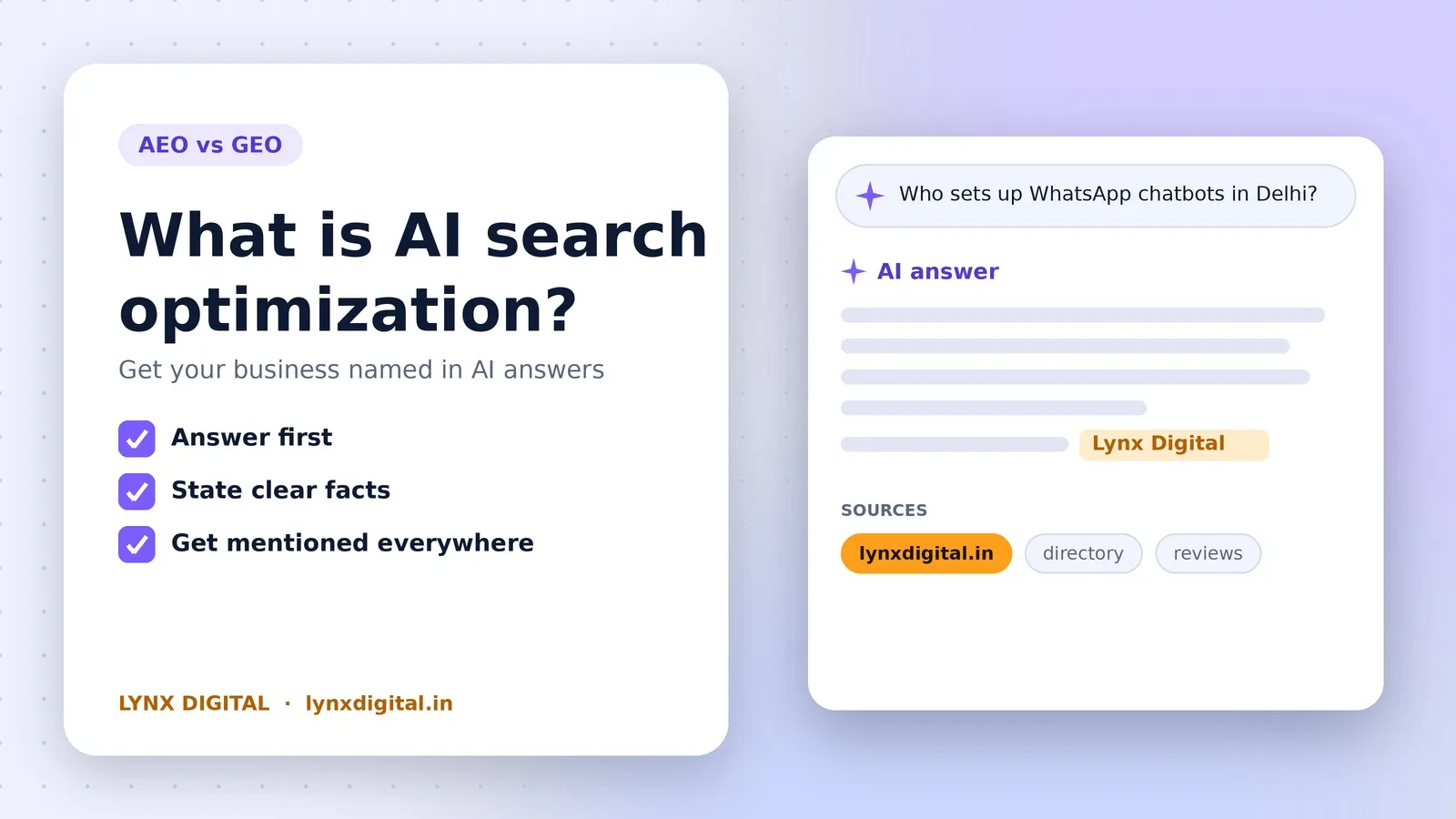
More people now ask an AI before they call anyone. They type “Who can set up a WhatsApp chatbot for my clinic in Delhi?” into Google, ChatGPT or Perplexity, and get a short answer that names a few businesses and links to them. AI search optimization is the work that makes sure your business is one of those names.
What is AI search optimization?#
AI search optimization means making your website and your business easy for AI tools to find, understand, trust and quote. It covers Google’s AI Overviews and AI Mode, and assistants such as ChatGPT, Gemini, Perplexity and Copilot. You will also hear it called AI SEO. It has two parts with names that sound more complicated than they are: AEO and GEO.
AEO vs GEO: what is the difference?#
- AEO (Answer Engine Optimisation) is about being the direct answer: Google’s featured snippets, “People also ask”, voice assistants and AI Overviews. The focus is on short, clear answers to specific questions.
- GEO (Generative Engine Optimisation) is about being mentioned and linked inside answers written by AI tools such as ChatGPT, Gemini, Perplexity and Google AI Mode. The focus is on being a trusted, well-described source that these tools choose to cite.
In practice the work overlaps almost completely, and both stand on ordinary SEO. If Google and Bing cannot find and index a page, no AI answer built on their search results can use it.
How AI tools decide which businesses to mention#
AI search tools look up the web before they answer, read the pages they find, and write a summary with links to their sources. Pages are more likely to be picked when they:
- answer the exact question asked, early and in plain words;
- state specific facts: what you do, where, for whom, at what price and how long it takes;
- are easy to read, with clear headings, short lists and questions with answers;
- belong to a business that other trusted sites also describe the same way, through reviews, directories and articles.
1. Make sure your pages are indexed#
Add your site to Google Search Console and Bing Webmaster Tools, submit your sitemap, and check that your robots.txt does not block search engines or the AI crawlers you want to allow. A page that is not indexed cannot appear in AI answers.
2. Answer the question in the first two lines#
Start each page with the answer, then explain. A summary box of key takeaways at the top works well for readers and is easy for AI tools to quote.
3. State your facts plainly#
For example, a clinic page that says “Dental clinic in Saket, open 10 am to 8 pm, root canal treatment from ₹4,500” gives an AI tool something it can quote. “We offer the best dental care” does not. Vague claims are rarely quoted; specific facts are.
4. Add questions and answers, with structured data#
End important pages with three to five real questions your customers ask, each with a short answer. Structured data (for example FAQ, Article and LocalBusiness) tells search engines exactly what the page contains.
5. Show who is behind the content#
Name the author, explain your experience and use real examples from your work. Readers and search engines both trust content more when they can see who wrote it and why they know the subject.
6. Get mentioned on other trusted sites#
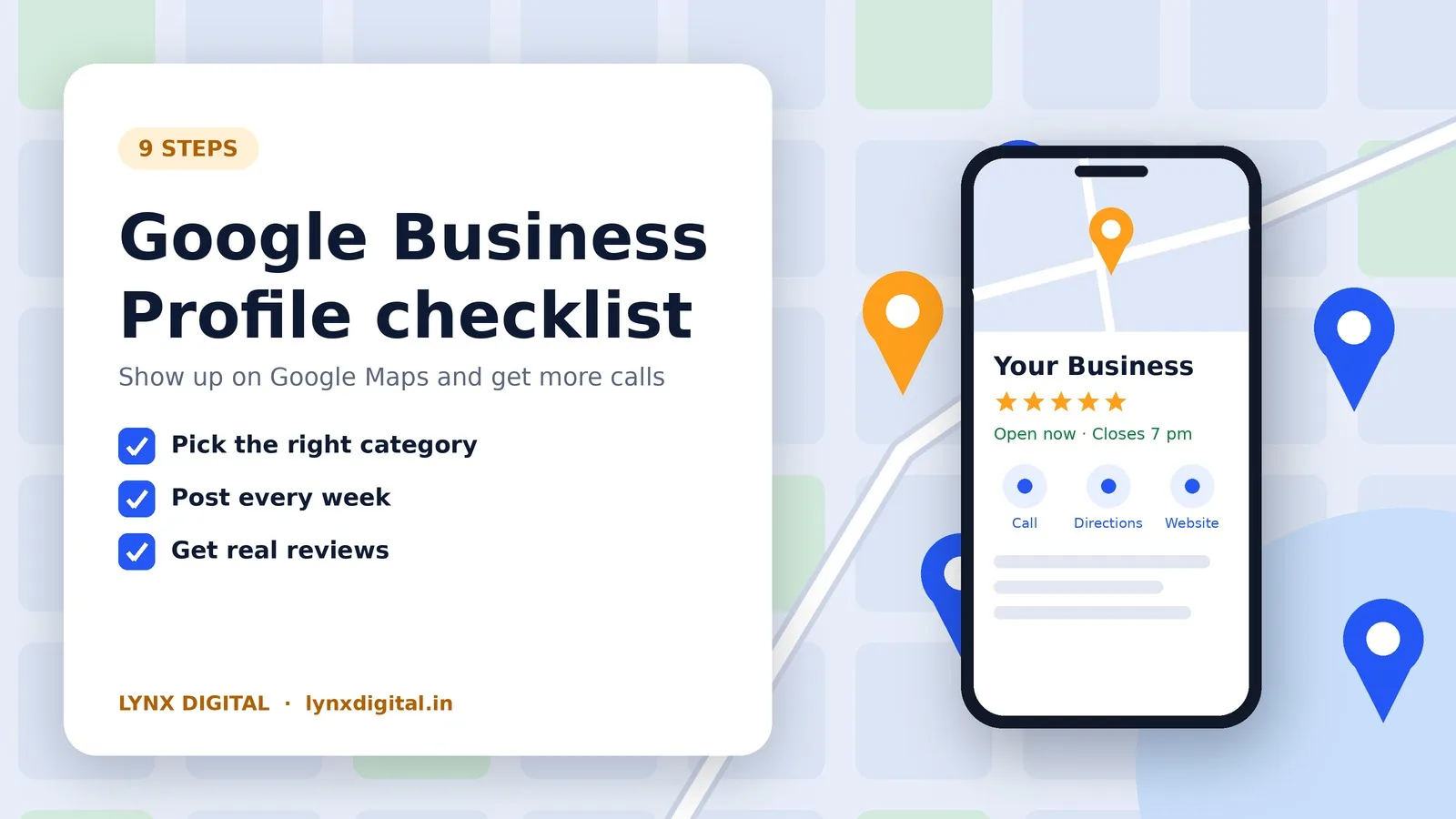
Keep your Google Business Profile complete, ask every customer for an honest review, and list your business on relevant directories and professional networks. When many trusted sites describe your business the same way, AI tools are more confident naming you.
7. Measure and keep improving#
Search Console now has a Generative AI features report that shows how often your pages appeared in AI Overviews and AI Mode. Once a month, also ask ChatGPT, Gemini and Perplexity the questions your customers ask, and note whether you are mentioned and which pages are linked.
How long does it take?#
Clear answers and facts on pages that are already indexed can start appearing in AI answers within weeks. Building enough trust to be named for competitive questions takes longer and depends on your reviews, mentions and how active your competitors are. Nobody can honestly guarantee a place in AI answers, just as nobody can guarantee a Google ranking.
Mistakes to avoid#
- Writing for robots. Repeating keywords makes pages harder to read and less likely to be quoted.
- Blocking AI crawlers by accident. Check robots.txt after every website change.
- Fake or bought reviews. They break Google’s rules and can remove your reviews altogether.
- Relying on one trick. Files such as llms.txt are optional and unproven; clear, indexed pages and real mentions matter far more.
Want to know where you stand?#
Run our free website audit: it checks your SEO basics, speed and AI search readiness in 30 seconds. If you want help, see how our AI search optimisation service works, or start with the Google Business Profile checklist.
 SEO
 Local SEO